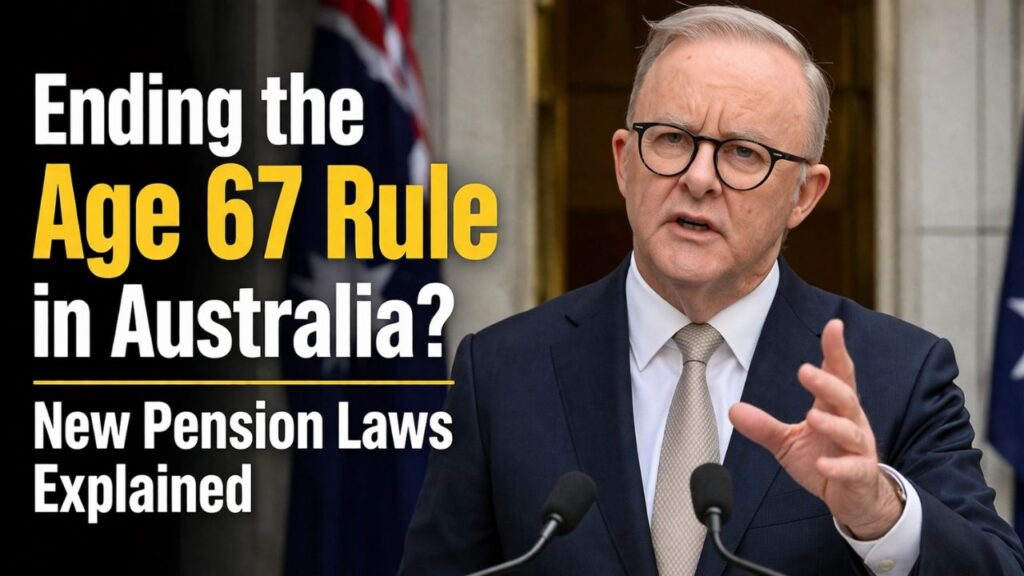
Australia’s retirement landscape is once again drawing national attention as discussions grow around the future of the Age Pension eligibility age. The current rule requires Australians to reach age 67 before qualifying for the Age Pension, but recent debates among policymakers, economists, and retirement experts have sparked speculation about whether changes could be introduced in the years ahead.
Although no official announcement has confirmed the end of the age 67 rule, the ongoing conversation reflects broader concerns about retirement affordability, workforce participation, and the long-term sustainability of public pension systems. For retirees and those approaching retirement, understanding what these discussions mean is essential for smart financial planning.
Understanding the Current Age 67 Pension Rule
The Age Pension eligibility age in Australia currently stands at 67. This requirement applies to individuals who meet residency rules as well as income and asset tests designed to ensure that support is directed toward those who need it most.
This age threshold was not always 67. It was gradually increased from 65 as part of earlier reforms intended to reflect longer life expectancy and improved health outcomes. As people live longer and spend more years in retirement, policymakers have worked to ensure that pension systems remain financially sustainable.
For retirees, the eligibility age serves as a cornerstone of retirement planning. It influences when individuals leave the workforce, how they structure their savings, and how they rely on superannuation funds or personal investments.
Understanding the purpose behind the age requirement helps explain why changes are carefully evaluated before being introduced.
Why Pension Age Changes Are Being Discussed
Several powerful economic and demographic factors are driving renewed discussion about pension age policies.
Rising Cost of Living Pressures
One of the most significant triggers for debate is the increasing cost of living. Housing, groceries, medical care, and utility expenses have all risen in recent years, placing pressure on retirees and those approaching retirement age.
Many individuals find themselves struggling to cover expenses in the years leading up to pension eligibility, particularly if they are unable to continue working due to health concerns or limited employment opportunities.
These challenges have prompted calls for more flexible retirement support systems.
Australia’s Aging Population
Australia, like many developed nations, is experiencing demographic shifts as the population ages. Longer life expectancy means more individuals rely on pensions for extended periods.
While this reflects improvements in healthcare and living standards, it also increases demand on public funding systems. Policymakers must balance the needs of retirees with the financial sustainability of the pension program.
Workforce Participation Trends
Another factor shaping discussions is the participation of older workers in the labor market. Some sectors benefit from experienced workers remaining active longer, while others struggle to provide suitable employment opportunities for aging employees.
These mixed outcomes have led to debates about how retirement systems should adapt to changing workforce realities.
Could the Pension Age Be Lowered?
One of the most widely discussed possibilities is reducing the pension eligibility age from 67 to a lower threshold. Supporters of this idea argue that earlier access to pensions could relieve financial stress for individuals facing physical limitations or limited job prospects.
Arguments Supporting a Lower Pension Age
Advocates suggest that physically demanding occupations, such as construction or manufacturing roles, make it difficult for some workers to remain employed into their late sixties.
Lowering the pension age could:
- Provide earlier financial support
- Reduce reliance on temporary assistance programs
- Improve health outcomes for aging workers
- Enhance retirement quality for vulnerable groups
These arguments emphasize fairness and accessibility.
Financial Challenges of Lowering the Age
Despite these advantages, lowering the pension age presents significant financial challenges. Earlier eligibility would increase the number of recipients and extend the length of time individuals receive payments.
This scenario could place additional strain on government budgets and require adjustments in taxation or spending priorities.
Balancing compassion with fiscal responsibility remains a central concern in policy discussions.
Alternative Reform Options Being Considered
Rather than eliminating the age 67 requirement entirely, policymakers may explore alternative reforms designed to provide flexibility without dramatically increasing costs.
Flexible Pension Access Models
One potential solution involves allowing partial pension access before age 67. Under this approach, individuals meeting certain criteria—such as health limitations or long-term employment history—could receive limited support earlier.
Flexible access models can provide targeted relief while preserving long-term sustainability.
Adjustments to Income and Asset Tests
Revising financial eligibility thresholds is another option. By adjusting income and asset test limits, policymakers could expand access to partial pensions for individuals currently excluded from support.
This approach focuses on improving fairness without significantly altering eligibility age rules.
Enhanced Employment Support Programs
Governments may also invest in programs designed to help older workers remain employed. Training initiatives, workplace accommodations, and flexible work arrangements can extend workforce participation and reduce reliance on early pension access.
Such strategies support both economic productivity and individual financial independence.
Impact on Current and Future Retirees
Any changes to pension eligibility rules would have meaningful consequences for retirees at different stages of their financial journey.
Effects on Those Near Retirement
Individuals approaching retirement age are often the most sensitive to policy changes. Adjustments to eligibility age or payment rules could alter retirement timelines and financial strategies.
For these individuals, maintaining flexible planning options is essential.
Considerations for Future Retirees
Younger workers may face a different retirement environment than previous generations. Changes to pension policies could influence how they save, invest, and prepare for retirement.
Increased reliance on personal savings and superannuation funds is likely to remain a key theme in long-term planning.
Being proactive early in a career can help reduce uncertainty later in life.
Government Position and Policy Direction
At present, there has been no official decision to end or reverse the age 67 rule. Government leaders continue to review pension policies as part of broader economic and social planning efforts.
These reviews typically consider:
- National budget sustainability
- Population aging trends
- Labor market conditions
- Public feedback and stakeholder input
Careful evaluation ensures that policy changes are both practical and sustainable.
Maintaining stability within the pension system remains a priority for long-term financial security.
What Seniors Should Do Now
While policy discussions continue, seniors and future retirees can take practical steps to prepare for potential changes.
Stay Informed About Policy Updates
Monitoring reliable announcements helps individuals understand how new proposals may affect retirement plans.
Remaining informed reduces uncertainty and supports confident decision-making.
Review Retirement Savings
Evaluating savings, investments, and superannuation balances helps ensure readiness for potential changes in pension eligibility.
Regular financial reviews allow individuals to identify gaps and adjust strategies accordingly.
Seek Professional Financial Advice
Financial advisors can provide personalized guidance based on individual goals, income sources, and retirement timelines.
Expert advice can help navigate complex policy changes and protect long-term financial wellbeing.
Broader Implications for Australia’s Retirement System
The debate surrounding the age 67 rule reflects larger questions about how societies support aging populations. As life expectancy rises and retirement patterns evolve, pension systems must adapt to remain effective.
Future reforms are likely to focus on balancing three key objectives:
- Providing adequate financial support
- Encouraging workforce participation
- Maintaining long-term fiscal sustainability
Achieving this balance requires thoughtful policy design and ongoing evaluation.
Changes introduced today will shape retirement experiences for decades to come.
What Lies Ahead for Pension Policy in Australia
Although the age 67 rule remains in place for now, continued discussions suggest that Australia’s retirement system may evolve over time. Whether through flexible access models, revised eligibility criteria, or expanded support programs, future reforms are expected to address emerging financial realities.
For retirees and those planning retirement, the most effective strategy is preparation. Staying informed, maintaining adaptable financial plans, and building diversified income sources can help individuals navigate uncertainty with confidence.
The future of retirement policy may still be unfolding, but proactive planning ensures that individuals remain ready for whatever changes may come.
