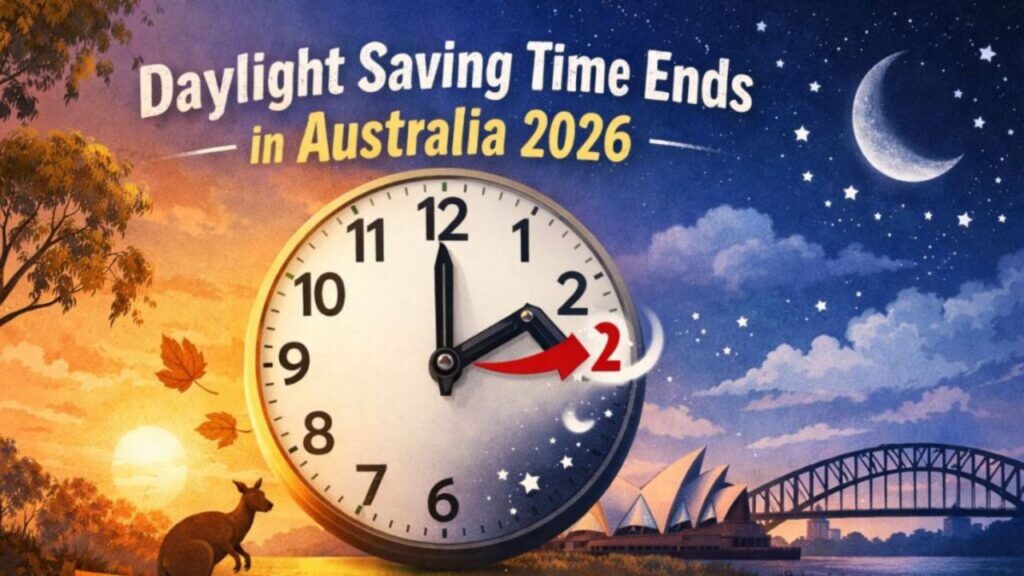
As seasonal patterns shift across Australia, millions of residents prepare for the conclusion of daylight saving time (DST) in 2026. While the adjustment itself takes only seconds, its effects ripple across daily routines, work schedules, travel planning, and digital systems.
Understanding when clocks change, which regions are affected, and how to prepare ensures a smooth transition. Whether you rely on tightly managed business operations, school schedules, or travel commitments, being informed helps avoid confusion and keeps your routine on track.
This comprehensive guide explains everything you need to know about the end of daylight saving time in Australia in 2026, including dates, affected regions, practical preparation tips, and the broader purpose behind the seasonal shift.
When Daylight Saving Time Ends in Australia in 2026
Daylight saving time in Australia officially ends on Sunday, April 5, 2026.
At precisely 3:00 AM Australian Eastern Daylight Time (AEDT), clocks will be turned backward by one hour to 2:00 AM Australian Eastern Standard Time (AEST).
This adjustment creates an additional hour overnight, often welcomed as an opportunity for extra rest. However, while the change seems simple, even a one-hour difference can influence sleep cycles, appointments, and travel schedules.
What Happens During the Time Change
When daylight saving ends:
- 3:00 AM AEDT becomes 2:00 AM AEST
- You effectively gain one extra hour
- Morning daylight arrives slightly earlier
- Evening daylight becomes shorter
This transition signals the shift toward cooler months and shorter days, aligning daily schedules more closely with natural daylight patterns.
Do Clocks Move Forward or Backward?
At the end of daylight saving time, clocks move backward by one hour.
This is often remembered using the phrase:
“Spring forward, autumn back.”
In autumn, clocks are turned back, allowing people to gain an additional hour overnight.
Devices That Update Automatically
Most modern digital devices adjust automatically, including:
- Smartphones
- Tablets
- Laptop and desktop computers
- Smartwatches
- Internet-connected televisions
- Modern car dashboards
These systems synchronize with global time servers, making manual adjustment unnecessary.
Devices That Require Manual Changes
Certain household items still require manual updates:
- Wall clocks
- Alarm clocks
- Microwave ovens
- Kitchen appliances
- Older vehicle clocks
- Security systems
Checking these devices on the evening before the time change helps prevent missed alarms or scheduling errors.
Which Australian States and Territories Observe Daylight Saving Time?
Daylight saving time is not observed nationwide. Only selected states and territories participate, primarily in the southeastern region of the country.
States and Territories That Observe DST
Residents in the following regions will adjust their clocks:
- Australian Capital Territory
- New South Wales
- South Australia
- Tasmania
- Victoria
In these areas, daylight saving has long been part of seasonal routines, affecting businesses, transportation systems, and schools.
States and Territories That Do Not Observe DST
The following regions remain on standard time throughout the year:
- Queensland
- Northern Territory
- Western Australia
These areas do not change their clocks in April or October, which can occasionally create temporary time differences between states during transition periods.
Understanding these regional differences is especially important for interstate travel, remote work coordination, and national business operations.
Why Australia Uses Daylight Saving Time
Daylight saving time was introduced to make more efficient use of daylight during the warmer months. By shifting clocks forward in spring and backward in autumn, evenings receive more natural light.
Key Benefits of Daylight Saving Time
DST provides several practical advantages:
Extended Evening Daylight
Longer daylight hours in the evening support outdoor activities, recreation, and social gatherings.
Energy Usage Patterns
More daylight in the evening may reduce reliance on artificial lighting during peak hours.
Economic and Lifestyle Benefits
Retail, tourism, and hospitality sectors often benefit from extended daylight hours.
Improved Outdoor Opportunities
Sports, fitness routines, and family activities become easier to schedule during daylight hours.
However, regional climates and lifestyle preferences explain why not all parts of Australia observe daylight saving time.
When Daylight Saving Time Returns in 2026
Daylight saving time will resume later in the year, marking the transition back to longer daylight evenings.
In 2026, daylight saving time begins on:
Sunday, October 4, 2026
At that time:
- 2:00 AM AEST becomes 3:00 AM AEDT
- Clocks move forward by one hour
- One hour of sleep is lost overnight
- Evenings become brighter for longer periods
This cycle continues annually, shaping seasonal routines across participating states.
How the Time Change Affects Daily Life
Although the clock change lasts only seconds, its impact extends into multiple aspects of daily living.
Sleep Patterns and Health
Adjusting to a new time schedule may briefly disrupt sleep routines.
Common short-term effects include:
- Difficulty falling asleep
- Early morning wakefulness
- Temporary fatigue
- Reduced concentration
Maintaining consistent sleep habits during the days before and after the time change can help reduce discomfort.
Work and Business Operations
Businesses operating across multiple states must carefully manage scheduling adjustments.
Areas affected include:
- Meeting coordination
- Customer service availability
- Delivery scheduling
- Financial market timing
- Airline and transport services
Clear communication helps minimize disruptions during the transition.
Travel and Transportation
Travelers should double-check departure times, particularly for:
- Domestic flights
- Interstate trains
- Long-distance bus services
- Hotel reservations
Even minor scheduling confusion can lead to missed connections or delayed arrivals.
Practical Tips to Prepare for the Time Change
Preparing ahead of time ensures the transition occurs smoothly without unnecessary stress.
Simple Preparation Strategies
Update Clocks Before Bed
Adjust manual clocks on Saturday evening to avoid morning confusion.
Review Scheduled Events
Check calendars, reminders, and alarms for early Sunday commitments.
Adjust Sleep Gradually
Going to bed slightly earlier in the days leading up to the change can help maintain comfort.
Confirm Travel Plans
Verify schedules with transportation providers if traveling around the transition period.
Check Automated Systems
Ensure workplace systems, security devices, and scheduling tools update correctly.
Taking these steps minimizes disruptions and supports a seamless transition.
The Future of Daylight Saving Time
Daylight saving time remains a topic of discussion in many countries, including Australia. Some regions continue evaluating whether the system provides measurable benefits.
Ongoing Discussions
Key areas of evaluation include:
- Energy consumption efficiency
- Public health considerations
- Economic productivity
- Regional climate suitability
- Community preferences
While daylight saving time continues in several Australian states, policy decisions may evolve over time as new data becomes available.
Final Thoughts
The end of daylight saving time on April 5, 2026, represents a routine yet important seasonal transition across much of Australia. While the clock adjustment itself takes only moments, its effects can influence schedules, sleep patterns, and daily routines.
By understanding when the change occurs, identifying whether your region participates, and preparing ahead of time, you can navigate the transition with confidence. Most digital devices will update automatically, but manual adjustments and careful planning remain essential.
As daylight saving time returns in October, this seasonal rhythm will continue shaping life across participating regions—reminding us how even small shifts in time can influence modern living in meaningful ways.
