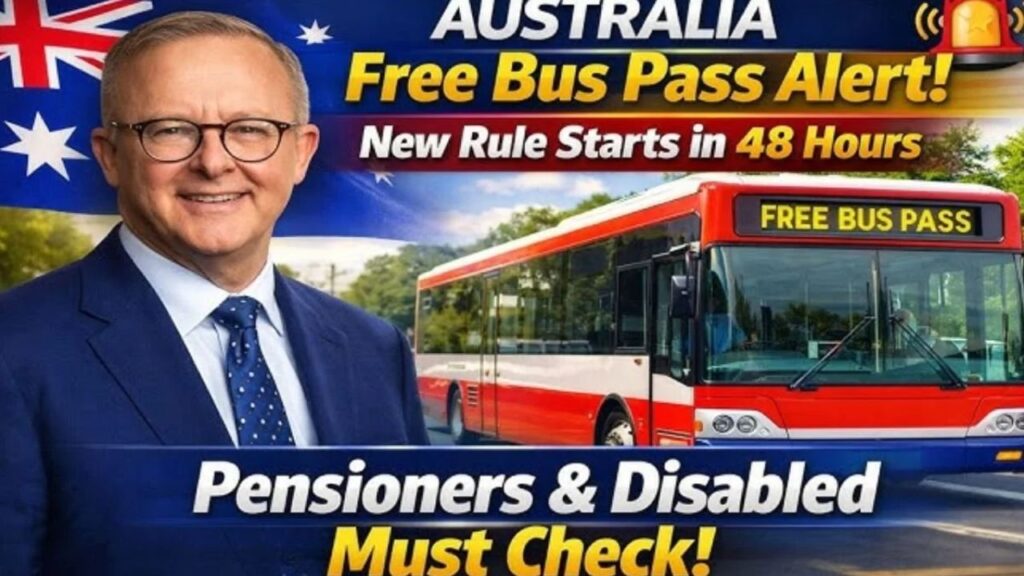
Australia is preparing for a fast-moving public transport update that could significantly reduce commuting costs for thousands of residents. A newly announced free bus pass initiative is set to roll out within the next 48 hours, offering temporary fare relief to selected groups across participating regions.
The move comes at a time when households are facing persistent cost-of-living pressures, including rising fuel prices, housing costs, and everyday expenses. By providing short-term free access to local bus services, transport planners aim to ease financial strain while encouraging greater use of public transportation.
While the program is expected to benefit many commuters, eligibility is limited to specific groups. Understanding how the rule works—and whether you qualify—can help you take full advantage of this opportunity.
What the New Free Bus Pass Rule Means for Daily Commuters
The new policy introduces temporary free access to selected bus routes for eligible residents. Instead of paying standard fares, approved participants will be able to travel without cost during the introductory period.
This initiative is designed to serve several purposes beyond individual savings. Authorities hope to:
- Reduce reliance on private vehicles
- Lower traffic congestion in busy urban zones
- Encourage environmentally responsible travel habits
- Support residents facing financial pressure
Although the rollout timeline is short, the structure has been designed for quick implementation. Eligible riders will be able to access services using digital passes linked to existing transit systems.
It is important to note that this program is being introduced as a limited-time initiative rather than a permanent change. Future expansion or extension will depend on demand, participation rates, and feedback from commuters.
Who Qualifies for the Free Bus Pass Program
Eligibility for the free bus pass focuses on individuals who rely heavily on public transportation or face financial challenges. While specific rules may vary slightly by region, the core qualifying groups remain consistent.
Low-Income Households
Residents earning below designated income thresholds are expected to qualify for free bus access. This group often relies on public transport for work, school, and daily errands.
Key eligibility indicators may include:
- Household income below approved limits
- Receipt of income-related assistance
- Valid proof of residency
For many households, free transport can free up valuable funds that would otherwise go toward commuting costs.
Full-Time Students
Students represent another major group expected to benefit from the program. Education-related travel often includes daily journeys to campuses, training centers, or libraries.
Eligible students may need to provide:
- Proof of current enrollment
- Student identification
- Verification from an accredited institution
Free transport can help students manage tight budgets while focusing on their academic goals.
Seniors Aged 65 and Above
Older residents frequently rely on buses for medical appointments, shopping trips, and social activities. Seniors holding valid concession documentation are likely to qualify automatically.
Providing free transport for seniors supports independence and promotes continued community participation.
Essential Workers
Healthcare and education professionals are among the workers most frequently included in transport support programs. Their daily travel often involves fixed schedules and essential services.
Qualifying roles may include:
- Healthcare professionals
- Medical support staff
- Teachers and education workers
- Community care personnel
Recognizing these workers through transport support helps ensure reliable access to critical services.
How to Apply for the Free Bus Pass
Applying for the free bus pass is expected to be a straightforward process. Transport authorities have introduced both digital and in-person options to accommodate different user needs.
Step 1: Confirm Eligibility
Before applying, individuals should review eligibility requirements carefully. This includes verifying income levels, student status, or professional roles.
Gather necessary documents such as:
- Government-issued identification
- Proof of eligibility category
- Residential address confirmation
Having documents ready can speed up approval.
Step 2: Submit Your Application
Applications may be submitted through:
- Official online transport portals
- Designated service centers
- Community assistance offices
Digital applications are generally processed faster, but in-person options remain available for those who prefer face-to-face support.
Step 3: Receive Your Digital Pass
Once approved, applicants will typically receive:
- A digital bus pass
- Instructions for activation
- Integration details for smart cards or mobile apps
This allows contactless boarding without requiring physical tickets.
Most approvals are expected to occur within hours, ensuring rapid access to benefits.
Financial Benefits for Riders
One of the most immediate advantages of the free bus pass is cost savings. For many commuters, transport expenses represent a significant portion of monthly budgets.
Monthly Savings Potential
Free bus travel could help riders save substantial amounts depending on travel frequency.
Typical savings may include:
- Daily commuters avoiding multiple fare payments
- Students reducing weekly travel expenses
- Families lowering transportation costs
Savings generated from transport relief can be redirected toward essential spending such as groceries, healthcare, or education.
Improved Budget Stability
Reducing recurring travel costs helps households maintain more predictable budgets. This financial stability is especially valuable during periods of economic uncertainty.
Even temporary relief can create lasting positive effects on personal finances.
Community and Environmental Benefits
The advantages of free bus travel extend beyond individual riders. Communities and cities also stand to gain from increased public transport usage.
Reduced Traffic Congestion
More people choosing buses instead of private vehicles can reduce road congestion, particularly during peak hours.
Less congestion leads to:
- Faster travel times
- Lower vehicle emissions
- Improved urban mobility
These improvements benefit both commuters and city infrastructure.
Lower Environmental Impact
Encouraging public transport use supports sustainability goals by reducing fuel consumption and air pollution.
Environmental benefits may include:
- Decreased carbon emissions
- Reduced reliance on fossil fuels
- Improved air quality
Over time, these changes contribute to healthier urban environments.
What Happens After the First 48 Hours
Although the rollout begins quickly, the program’s long-term future depends on performance and public response.
Authorities are expected to monitor:
- Passenger usage levels
- Application volumes
- Rider feedback
- Operational efficiency
These insights will help determine whether the initiative should be extended or modified.
Residents who miss the initial launch window may still have opportunities to apply if the program continues into later phases.
Staying informed through official announcements ensures you remain aware of updates or deadlines.
Preparing for the Rollout: What You Should Do Now
With the launch timeline approaching, preparation is essential. Acting early increases your chances of receiving approval without delays.
Gather Required Documents
Before applications open, ensure you have:
- Valid photo identification
- Proof of eligibility
- Residency documentation
Organizing paperwork in advance reduces last-minute stress.
Plan Your Travel Needs
Review your regular travel routes and identify participating bus services in your area. Understanding your schedule helps maximize the value of the free pass.
Stay Updated Through Official Channels
Transport policies can change quickly during rollout periods. Regularly checking official announcements ensures you receive accurate information about:
- Application deadlines
- Route participation
- Pass duration
Reliable information helps prevent confusion and missed opportunities.
Final Thoughts: A Timely Opportunity for Transport Relief
The new free bus pass rule represents a timely response to rising living costs and evolving transport needs. By offering temporary fare-free travel to targeted groups, the initiative aims to deliver immediate financial relief while promoting sustainable commuting habits.
For eligible residents, the potential savings and convenience could make a meaningful difference in daily life. Beyond individual benefits, increased public transport use may improve traffic flow, support environmental goals, and strengthen community accessibility.
With only 48 hours before rollout, preparation is key. Checking eligibility, gathering documents, and applying promptly can ensure you make the most of this limited-time opportunity.
