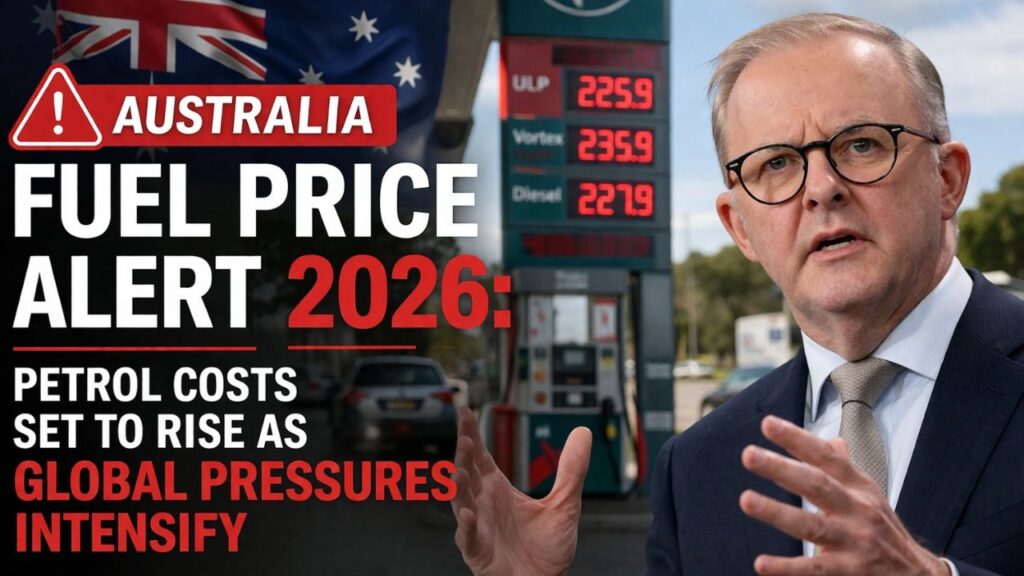
Fuel prices across Australia are once again under close watch as global pressures begin pushing petrol costs higher in 2026. Motorists, businesses, and households are being advised to prepare for potential increases at the pump, driven by a mix of international developments and domestic challenges.
After a period of relative stability, the outlook is shifting. Analysts are highlighting rising crude oil prices, geopolitical tensions, and ongoing supply chain pressures as the main forces behind the expected increase. For many households already balancing rising living expenses, higher fuel prices could add another layer of financial pressure.
Understanding what is driving these changes—and how to manage them—can help Australians stay prepared and make smarter financial decisions in the months ahead.
What Is Driving Petrol Price Increases in 2026
Several interconnected global factors are contributing to higher petrol prices. At the center of this trend is the crude oil market, where production levels, global demand, and political developments play a major role.
Rising Crude Oil Prices
Crude oil is the primary ingredient in petrol production, and its price strongly influences what consumers pay at fuel stations. When oil-producing nations reduce output or face production challenges, supply tightens, causing prices to rise.
In recent months, increased industrial activity and travel demand have pushed global oil consumption higher. At the same time, production growth has remained cautious, creating upward pressure on crude prices that eventually reaches consumers.
Geopolitical Tensions
Political instability in oil-producing regions can disrupt supply chains and create uncertainty in energy markets. Even the possibility of disruptions can lead to speculative price increases.
These geopolitical risks make oil markets more volatile, and fuel prices often react quickly to international developments.
Currency Exchange Rate Movements
Exchange rates also play an important role in petrol pricing. Since Australia imports a large portion of its refined fuel, a weaker Australian dollar increases the cost of imports.
When the currency loses value against the U.S. dollar—the primary currency used in oil trading—the cost of importing fuel rises, adding to domestic petrol prices.
Global Supply and Demand Pressures
The balance between supply and demand remains one of the most influential factors shaping fuel prices.
Increasing Global Demand
As global travel and trade continue to grow, oil consumption has surged. Aviation, freight transport, and manufacturing sectors are all consuming more fuel than in previous years.
This increased demand places pressure on production systems that may already be operating near capacity.
Controlled Production Output
Oil-producing countries are carefully managing output levels to maintain market stability and protect pricing structures. While this strategy supports long-term market health, it can limit supply in the short term, driving prices upward.
For Australia, which depends heavily on imported fuel products, global supply decisions have a direct impact on local fuel costs.
Domestic Factors Affecting Fuel Prices
While international forces dominate fuel pricing, local factors also influence how much Australians pay at the pump.
Transportation and Distribution Costs
Fuel must be transported from refineries to distribution centers and retail stations. Rising logistics costs, including freight and infrastructure expenses, can increase the final price consumers pay.
Remote and regional locations often face higher transportation costs, which is why fuel prices vary widely across different areas.
Fuel Taxes and Government Policies
Fuel excise and other taxes make up a consistent portion of petrol prices. Government policy decisions regarding taxation levels can influence overall fuel affordability.
Temporary policy adjustments may provide short-term relief, but long-term pricing trends typically remain tied to global oil markets.
Seasonal Demand Patterns
Certain times of the year bring increased travel activity, such as holiday seasons or long weekends. During these periods, demand spikes can lead to short-term price increases.
Understanding seasonal cycles can help motorists plan purchases more effectively.
How Rising Fuel Prices Affect Households
Higher petrol costs create ripple effects that extend beyond the fuel pump.
Increased Daily Expenses
For households relying on personal vehicles, fuel is a recurring and unavoidable expense. Even modest increases in petrol prices can significantly impact monthly budgets.
Commuters traveling long distances or living in suburban or regional areas often feel the effects most strongly.
Higher Cost of Goods and Services
Businesses dependent on transportation face rising operational expenses when fuel prices increase. Delivery costs rise, logistics become more expensive, and these added costs are often passed on to consumers.
As a result, fuel price increases can contribute to broader inflation across everyday goods.
Pressure on Household Budgets
Fuel is closely tied to lifestyle convenience and mobility. When prices rise, households may need to adjust spending habits, reduce discretionary travel, or allocate more income toward essential transportation.
Regional Differences in Fuel Pricing
Fuel prices are not uniform across Australia, and regional differences can be significant.
Metropolitan Price Cycles
Major cities often experience predictable price cycles. Prices may rise sharply before gradually declining over several days or weeks.
Savvy motorists who track these cycles can save money by filling up during lower-price phases.
Higher Costs in Regional Areas
Regional and remote communities typically face higher fuel prices due to transportation distances and limited supplier competition.
Smaller markets may also lack the volume advantages enjoyed by metropolitan regions, contributing to sustained higher costs.
Understanding regional patterns allows consumers to identify the most cost-effective purchasing opportunities.
Expert Outlook for Fuel Prices in 2026
Market analysts expect petrol prices to remain volatile throughout 2026. While short-term fluctuations are normal, the broader trend indicates the likelihood of higher average prices compared to previous years.
Several factors will influence the final trajectory:
- Changes in global oil production levels
- Shifts in international demand
- Currency exchange movements
- Economic growth trends
- Technological developments in energy production
Although price increases appear likely, sudden decreases are still possible if supply improves or demand slows unexpectedly.
Practical Tips to Manage Rising Fuel Costs
While consumers cannot control fuel prices, they can adopt strategies to reduce overall fuel spending.
Improve Driving Efficiency
Smooth acceleration, consistent speeds, and reduced idling can significantly improve fuel efficiency. Aggressive driving habits increase fuel consumption and accelerate vehicle wear.
Maintaining moderate speeds and avoiding sudden stops can deliver noticeable savings over time.
Maintain Your Vehicle
Regular servicing helps ensure engines run efficiently. Proper tire pressure, clean air filters, and routine maintenance contribute to better fuel performance.
Small maintenance steps can lead to long-term savings.
Plan Trips Strategically
Combining errands into a single trip reduces total distance traveled. Mapping routes in advance also helps avoid traffic congestion and unnecessary fuel consumption.
Efficient travel planning minimizes wasted fuel and saves time.
Use Technology to Compare Prices
Fuel price comparison apps provide real-time updates on nearby fuel stations. Monitoring price trends helps drivers choose stations offering competitive rates.
Over time, even small savings per litre can add up significantly.
Potential Government Responses
Governments may introduce measures to reduce the financial strain caused by rising fuel costs. These responses typically focus on short-term relief while balancing long-term economic goals.
Possible actions include:
- Temporary adjustments to fuel excise
- Subsidies or rebates for eligible households
- Support programs for essential industries
- Investment in transportation infrastructure
While such measures may offer relief, they are often temporary solutions designed to address immediate challenges.
Growing Interest in Alternative Energy Solutions
Rising petrol prices are accelerating the shift toward alternative transportation technologies.
Electric and Hybrid Vehicles
Electric vehicles (EVs) and hybrid models are becoming increasingly attractive as fuel costs rise. These vehicles reduce reliance on petrol and offer lower long-term operating costs.
Government incentives and improved charging infrastructure are making adoption more accessible.
Renewable Energy Integration
Investments in renewable energy systems are supporting broader transitions toward sustainable mobility solutions.
As technology improves, alternative energy options are expected to play a larger role in transportation systems.
What Australians Should Do Now
With fuel prices expected to rise in 2026, preparation and awareness are essential. Monitoring fuel price trends, reviewing household budgets, and adopting cost-saving strategies can help reduce financial pressure.
Motorists should remain informed about global developments affecting energy markets and stay alert to changes in local pricing patterns. By taking proactive steps today, households and businesses can better manage the challenges of rising fuel costs and maintain financial stability in an evolving economic environment.
