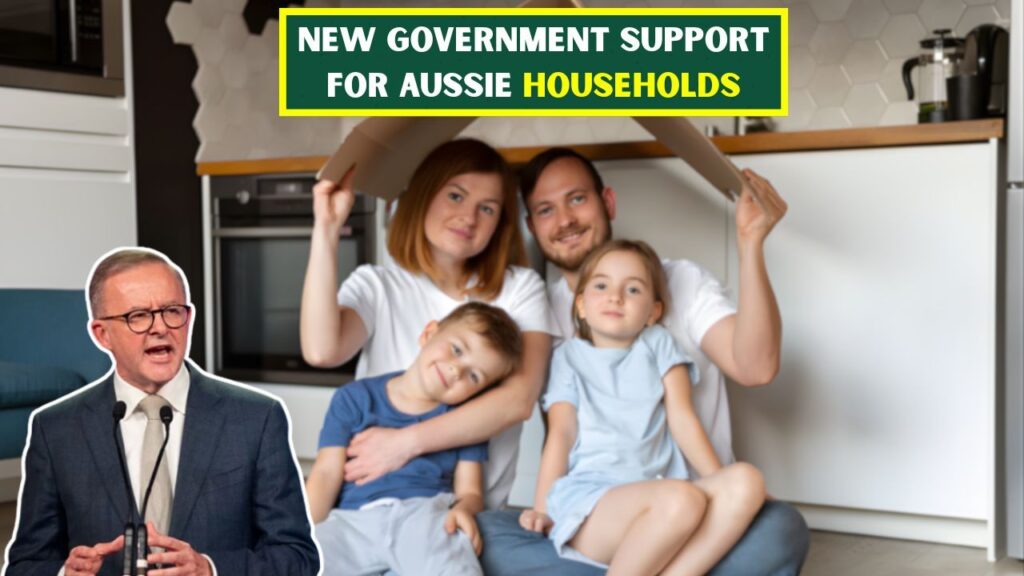
The cost-of-living environment in Australia continues to place significant pressure on households in 2026, with rising expenses across housing, utilities, transport, and essential goods. Many families are experiencing reduced financial flexibility as everyday costs increase faster than income growth.
This ongoing challenge has prompted a series of government interventions aimed at easing short-term pressure while also addressing long-term structural issues. The latest support measures are designed to assist low and middle-income households, pensioners, and individuals most affected by economic strain.
The overall goal is to improve financial stability while maintaining sustainable economic management.
New Government Support Measures for Households
In response to rising household expenses, the government has introduced a range of cost-of-living relief initiatives in 2026. These measures focus on direct financial assistance, targeted subsidies, and expanded support for essential services.
One of the key components is increased welfare support for eligible recipients, helping households manage rising costs of food, energy, and transportation. This adjustment aims to provide immediate relief to individuals most affected by inflationary pressures.
Additional funding has also been directed toward affordable housing programs. By increasing housing availability and improving rental support, the government aims to reduce long-term financial strain on households struggling with high accommodation costs.
Energy Relief and Utility Cost Stabilization
Energy costs remain one of the most significant contributors to household financial stress in 2026. To address this, new measures include structured energy price controls designed to reduce sudden spikes in utility bills.
These initiatives aim to stabilize electricity and gas costs while supporting long-term investment in sustainable energy infrastructure. Households are expected to benefit from more predictable billing cycles and reduced volatility in energy pricing.
In addition, incentives for renewable energy adoption are being expanded, encouraging long-term reductions in household energy dependency and costs.
Housing and Rental Assistance Initiatives
Housing affordability remains a central concern in 2026, with rental and property prices continuing to rise across many urban areas. In response, the government has increased investment in affordable housing development and rental assistance programs.
These measures aim to expand housing supply while providing immediate relief for renters under financial pressure. Subsidy enhancements and targeted support for vulnerable groups are expected to reduce housing insecurity in the short term.
Long-term strategies focus on increasing construction capacity and improving planning systems to ensure more consistent housing availability in high-demand regions.
Impact on Families and Household Budgets
The new support measures are expected to provide meaningful relief for families managing tight budgets. Increased welfare payments and targeted subsidies will help reduce out-of-pocket expenses for essential services such as childcare, healthcare, and education.
Families with children are likely to benefit from expanded support in education-related costs, making access to schooling and childcare more financially manageable. This is particularly important for working households balancing employment and rising living expenses.
Despite these improvements, many households may still face ongoing financial pressure, highlighting the importance of continued policy adjustments.
Long-Term Economic Strategy for Cost Stability
Beyond immediate relief, the government’s strategy includes long-term structural reforms aimed at improving overall affordability. A major focus is investment in renewable energy infrastructure, which is expected to reduce dependency on volatile fossil fuel markets and stabilize energy costs over time.
Transport infrastructure improvements are also part of the broader plan, aiming to reduce commuting costs and improve access to employment opportunities. This includes enhancements to public transport networks and regional connectivity.
Housing supply expansion remains a key priority, with long-term planning aimed at increasing the availability of affordable homes and reducing rental market pressure.
Broader Economic Context Behind Rising Costs
The cost-of-living pressures in 2026 are influenced by multiple interconnected factors, including global inflation trends, supply chain adjustments, and domestic demand pressures. Essential goods and services have experienced price increases, impacting household budgets across income levels.
While inflation has shown signs of stabilization compared to previous peaks, its effects continue to be felt in daily living costs. As a result, government intervention has become increasingly important in maintaining household financial stability.
Challenges in Delivering Sustainable Relief
Although current support measures provide short-term assistance, achieving long-term affordability remains a complex challenge. Structural issues such as housing supply shortages, energy market volatility, and population growth continue to influence household expenses.
Policy effectiveness will depend on sustained implementation, investment consistency, and coordination across multiple sectors. Without long-term structural improvements, short-term relief measures may only partially offset ongoing cost pressures.
Future Outlook for Household Affordability
The outlook for household affordability in Australia remains cautiously stable. While government support measures are expected to ease immediate financial pressure, long-term improvements will depend on continued economic reforms and infrastructure development.
Energy market stabilization, housing expansion, and wage growth alignment will play key roles in shaping future affordability conditions. Over time, these combined efforts are expected to gradually improve financial resilience among households.
However, in the short term, families may continue to face elevated living costs, requiring careful budgeting and reliance on support programs.
Conclusion
The 2026 cost-of-living response in Australia reflects a balanced approach between immediate relief and long-term economic planning. With expanded welfare support, energy cost controls, and housing initiatives, the government aims to reduce financial pressure on households while building a more stable economic foundation.
Although challenges remain, these measures provide meaningful support to families navigating rising living costs. The effectiveness of these policies will ultimately depend on sustained implementation and continued adaptation to changing economic conditions.
