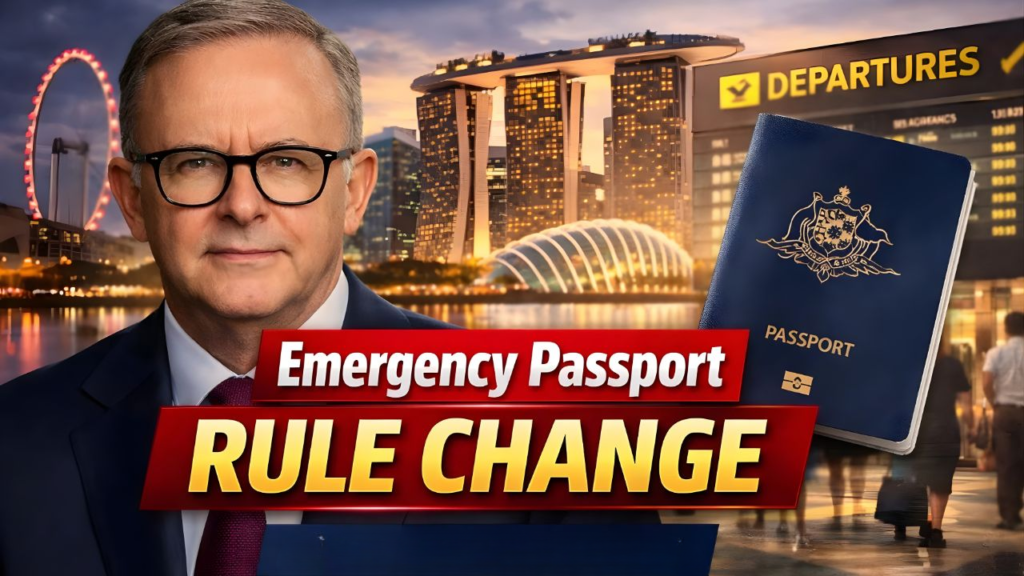
In 2026, Australia has introduced stricter regulations for emergency passports, reflecting a shift toward more controlled issuance and verification processes. While no sweeping laws have yet been enacted, authorities have clarified the boundaries for urgent travel documents, making it essential for applicants to understand the rules to avoid delays or denials.
What Is an Emergency Passport in Australia?
An emergency passport is a temporary travel document issued to Australians facing urgent situations abroad. Typical scenarios include:
- Family emergencies, such as serious illness or death of a relative.
- Critical business travel requiring immediate departure.
- Unexpected, compelling circumstances where standard passport processing is not feasible.
These passports are issued through Australian embassies or consulates and are intended as a short-term solution.
Stricter Verification in 2026
The 2026 updates have tightened eligibility criteria for emergency passports:
- Applicants must provide clear justification for travel, demonstrating a compassionate or compelling reason.
- Supporting documentation is mandatory. Requests without proper proof are denied, even for urgent cases.
- Authorities are placing greater emphasis on validating claims to prevent misuse.
Priority and Fast-Track Alternatives
One major shift is the use of priority and fast-track processing instead of default emergency passports. Applicants can now choose:
- Priority processing: approximately 2 business days.
- Fast-track processing: around 5 business days.
These options provide quicker alternatives for time-sensitive travel, reducing reliance on emergency passports while ensuring compliance with documentation rules.
Limitations of Emergency Passports
Emergency passports come with several restrictions:
- They may lack the latest security features of standard passports.
- Certain countries may not recognize emergency passports for entry.
- Travelers must verify international acceptance before planning trips.
Because of these limitations, emergency passports are no longer a guaranteed solution for last-minute travel.
Planning Ahead Is Essential
With stricter approval and verification processes, travelers are advised to:
- Allow at least six weeks for standard passport processing whenever possible.
- Use priority or fast-track services if immediate travel is required.
- Stay informed about entry requirements in destination countries, including passport validity rules.
By planning in advance, Australians can reduce travel disruptions and avoid last-minute emergencies.
Global Arrival and Passport Validity Rules
Many countries have increased their minimum passport validity requirements, often requiring at least six months remaining on a passport for entry. This applies equally to emergency passports, making it critical for travelers to:
- Confirm their emergency passport meets destination requirements.
- Check airline policies regarding acceptance of temporary travel documents.
- Understand that even approved emergency passports may be restricted at borders.
Conclusion
The 2026 updates to Australia’s emergency passport procedures emphasize documentation, justification, and careful planning. Emergency passports remain available for urgent travel, but stricter checks and alternative fast-track options mean travelers must act proactively. By understanding the new rules, Australians can ensure smoother travel, avoid denied boarding, and comply with international entry standards.